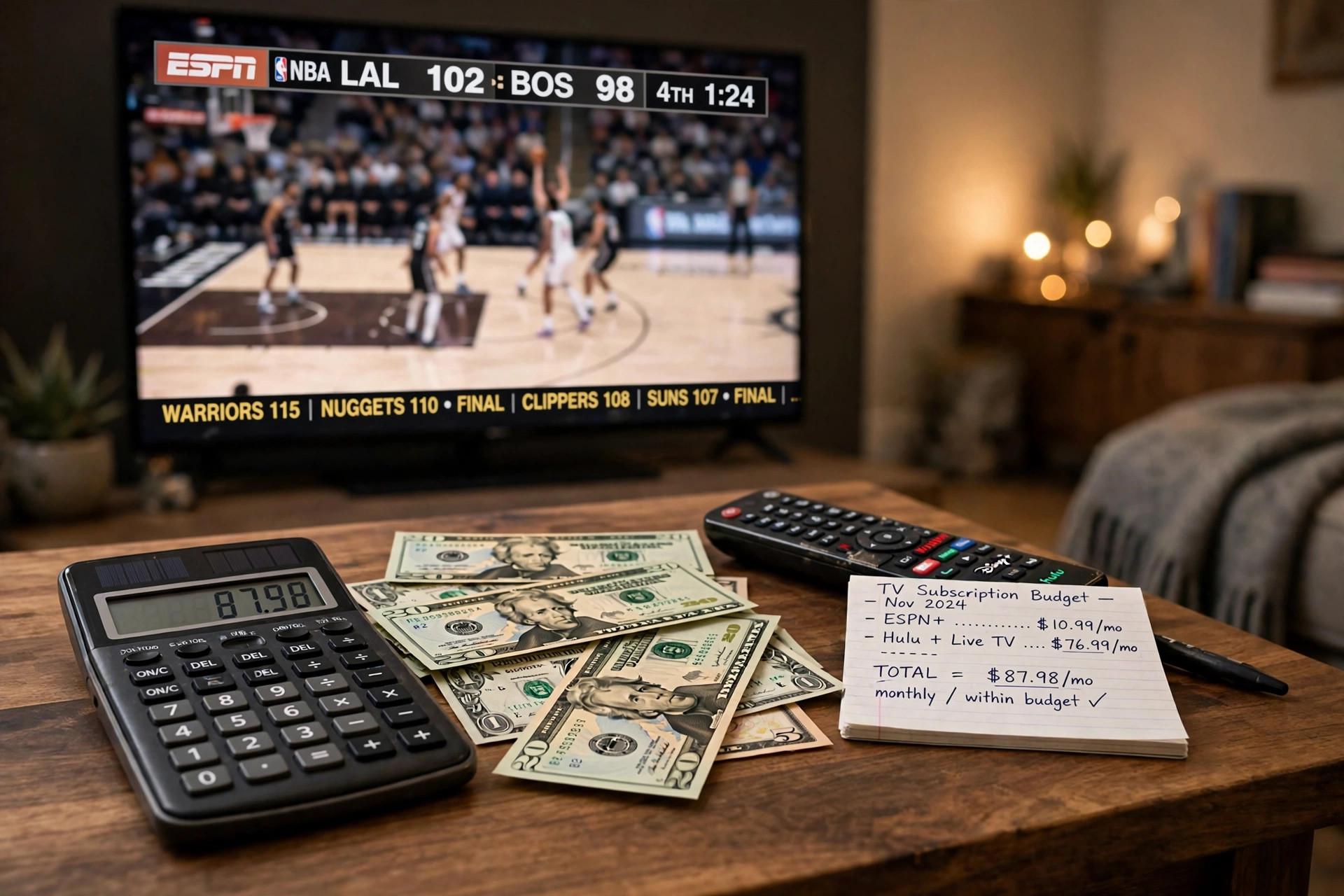
The cable bill is the number most American households know by heart, because it arrives every month and it never goes down. A bundle with the sports package and a couple of premium movie channels lands between $120 and $200 a month once equipment rental, broadcast fees, regional sports fees and taxes are added, and that is before a streaming app or two. An IPTV Premium year costs $99.99 — less than a single month of that cable bill — and carries the same channels, the same games and a bigger movie library. This guide puts the two side by side, line by line, so the saving can be seen in full, and so the trade-offs can be judged honestly instead of hidden.
Start with the household's own numbers, because the national averages hide the local truth. Pull the last cable bill and add the lines: the bundle itself, the set-top box rental for each TV, the DVR fee, the broadcast fee, the regional sports fee, and the taxes. The bundle number is never the bill number. A $99 bundle with two boxes, a DVR, a broadcast fee of $20, a sports fee of $15 and taxes is a $170 bill, and that is the number to compare. The IPTV number is simpler: $99.99 a year for Premium, $59.99 for Basic, with no box rental, no DVR fee, no broadcast fee and no tax line. The plans page shows the whole IPTV price list, so the comparison can be made against the real cable bill, not a guess.
IPTV vs cable: the monthly bill, line by line
Here is the comparison for a household with two TVs, a sports package and a movie channel. Cable charges for the bundle, for each box, for the DVR, for the broadcast and sports fees, and for taxes. IPTV charges for the subscription, and nothing else. The internet is the one cost both sides share: the house already pays for internet, and IPTV runs on it, while cable runs on its own wire. A household that drops cable keeps the internet and drops the rest, which is why the saving is the whole cable bill minus the IPTV year, not the cable bill minus the internet.
| Monthly cost | Cable bundle | IPTV Premium |
|---|---|---|
| Bundle / subscription | $99.00 | $8.33 |
| Set-top box rental x2 | $20.00 | $0 |
| DVR fee | $12.00 | $0 |
| Broadcast fee | $20.00 | $0 |
| Regional sports fee | $15.00 | $0 |
| Taxes | $14.00 | $0 |
| Total per month | $180.00 | $8.33 |
| Total per year | $2,160.00 | $99.99 |
The table uses a $180 cable bill, which sits in the middle of the range for a household with sports and movies. A cheaper cable bundle, without the sports package, runs closer to $120 a month, or $1,440 a year, against $99.99 for Premium — a saving of $1,340. A bigger bundle, with every premium channel and four boxes, runs past $200 a month, or $2,400 a year, against $99.99 — a saving of $2,300. The IPTV number does not move, because the price is the price, while the cable number grows with every box, every fee and every year. The saving over five years, at $180 a month, is $10,300 against $499.95 for five years of Premium. That is a car, not a rounding error.
Channels and sports: what you keep, what you lose
The channels are the part people worry about losing, and the worry is mostly misplaced. Cable carries a few hundred channels, of which a household watches twenty. Premium IPTV carries 57,000+ channels, including the twenty: ABC, NBC, CBS, FOX, ESPN, ESPN2, FS1, NFL Network, NBA TV, TNT, TBS, CNN, MSNBC, AMC, FX, HBO, Showtime, Discovery, HGTV, Nickelodeon and Cartoon Network. The local affiliates that carry the news and the games are in the list, and the regional sports networks that cable charges extra for are in the list too. A household that drops cable keeps the channels it watches, and gains the ones cable kept behind a higher tier.
Sports is the same story. The NFL on FOX, CBS, NBC and ESPN, the NBA on ESPN, TNT and ABC, the Premier League and the Champions League, MLB on MLB Network and the NHL on NHL Network — all of it is on Premium, plus every pay-per-view night, which cable charges $79.99 for, one night at a time. The thing cable has that IPTV does not is a technician who comes to the house, a set-top box with a familiar remote, and a single company to call when the picture goes wrong. IPTV replaces those with an app, a WhatsApp message, and a team that answers in minutes. For a household that is comfortable with a Firestick, the trade is easy. For a household that is not, the trial is the test: the plans and prices guide shows what every plan costs, and the trial costs nothing.
Equipment, contracts and the fine print
Cable comes with equipment: a set-top box for each TV, a DVR, a remote, and a technician who installs them. The boxes are rented, usually $10 a month each, and they stay the property of the cable company. IPTV comes with no equipment: the app runs on the TV, the Firestick or the phone the house already owns, and there is nothing to rent, nothing to return, and nothing to pay for when a box breaks. A Firestick 4K Max is a one-time purchase, not a monthly rental, and it belongs to the household. The installation is five minutes per device, following the installation guide, and the team installs it remotely for free if the household prefers.
Contracts are the second difference. Cable bundles usually run for one or two years, with an early termination fee that runs into hundreds of dollars if the household leaves early, and a price that rises when the introductory period ends. The $99 bundle becomes $140 in month thirteen, and the household finds out from the bill. IPTV has no contract and no termination fee. A monthly plan ends after a month, a yearly plan ends after a year, and the renewal price is the same as the price signed up at. Cancelling is a message on WhatsApp, covered in the cancellation guide, and there is no fee for leaving, no equipment to return, and no final bill to argue about.
Picture quality and the internet question
Cable delivers a steady picture because it runs on its own wire, and that reliability is its best quality. IPTV runs on the household internet, and the picture is only as good as the connection. A 4K stream needs a steady 25 Mbps, and a household with two TVs in 4K needs 50 Mbps of real speed. Most American cable and fiber internet plans deliver that easily — a 200 Mbps or 300 Mbps plan is common — but the speed at the router is not the speed at the TV, and a TV two rooms from the router, on Wi-Fi through two walls, can see half the promised speed. The fix is a wired Ethernet cable to the main TV, which costs nothing if the cable is already in a drawer.
The honest comparison is that cable wins on reliability in a house with slow internet, and IPTV wins on price in a house with fast internet. A household on a 25 Mbps DSL line will see a better picture from cable, because the cable wire does not share the internet. A household on fiber or fast cable internet will see the same picture from IPTV, in 4K, for a tenth of the price. The trial settles it for free: start the 24 hours on a Friday evening, watch the game in 4K, and judge the picture on the household's own TV and own internet. If it holds, the saving is real. If it stutters, cable is the right answer for that house, and the trial cost nothing to learn it.
The five-year math
Five years is the horizon that matters, because a subscription is not a month. It is a habit. Five years of cable at $180 a month is $10,800. Five years of Premium IPTV is $499.95. The difference is $10,300. Five years of cable at $120 a month is $7,200, against $499.95 — a difference of $6,700. Even a household that keeps one streaming app alongside IPTV, at $15.99 a month, spends $959.40 on the app over five years, and the total is still $1,459.35 against $7,200 or $10,800. The saving buys a car, a holiday, or a year of groceries, depending on the household. It is not a small number, and it is the reason the comparison is worth doing properly, line by line, instead of by habit.
The saving is not free, and the price of it is the work: installing an app, learning a new remote, messaging support instead of calling a technician. For a household that is comfortable with a phone and a Firestick, that work is an evening. For a household that is not, it is a reason to keep cable, and that is a fair choice too. The wrong choice is the one made without the numbers: paying $180 a month out of habit, without ever adding the bill, or switching to IPTV without testing it on the household's own internet. The cost guide lays out the IPTV prices in full, and the trial tests the picture for free. With the numbers and the test, the decision makes itself.
Switching from cable to IPTV without a gap
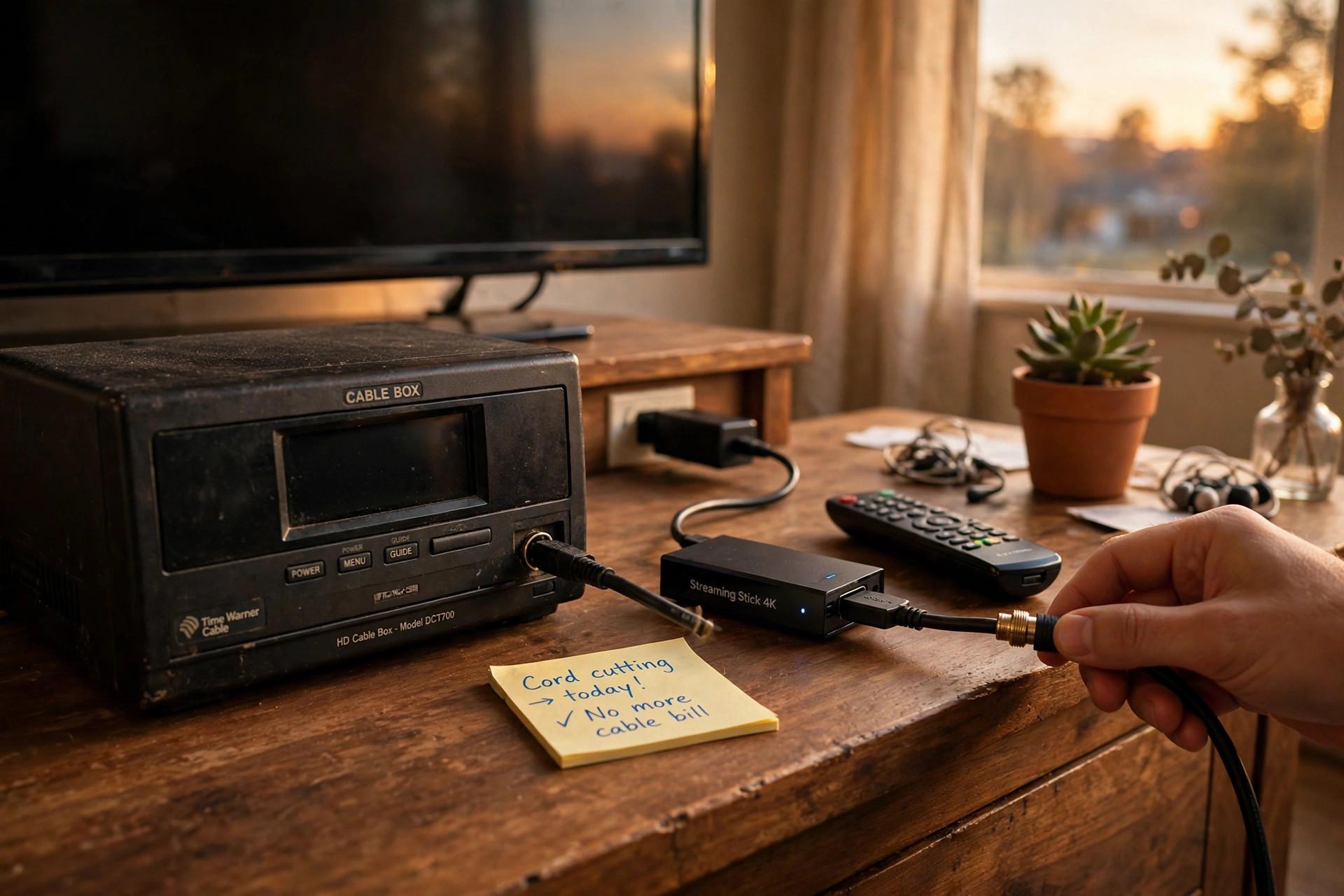
The switch follows the same rule as any switch: the new service must be working before the old one is cancelled. Keep the cable running, start the IPTV trial on a Friday, test it through a full week, buy one month, and run both for that month. Watch the NFL on cable one Sunday and on IPTV the next, and note which picture held up. At the end of the month, cancel the cable, return the boxes, and watch the final bill for the equipment charges. The switching guide covers the order in detail, including the device-by-device move and the timing of the cancellation, so the house never spends a night without TV.
Returning the cable boxes is the step people forget, and the boxes keep charging rent until they are back. Pack them, take them to the cable store or post them with the label the company sends, and keep the receipt. Check the final bill for the rental charges, the early termination fee if the contract had one, and the last month's charge, which is usually prorated to the day the service ended. A final bill that still charges rent for a returned box is a bill to dispute, with the return receipt as the evidence. Once the boxes are back and the bill is settled, the household pays $8.33 a month for Premium, and the $180 bill is a memory. The renewal guide explains how the IPTV renewal works from there, so the new bill never surprises anyone either.